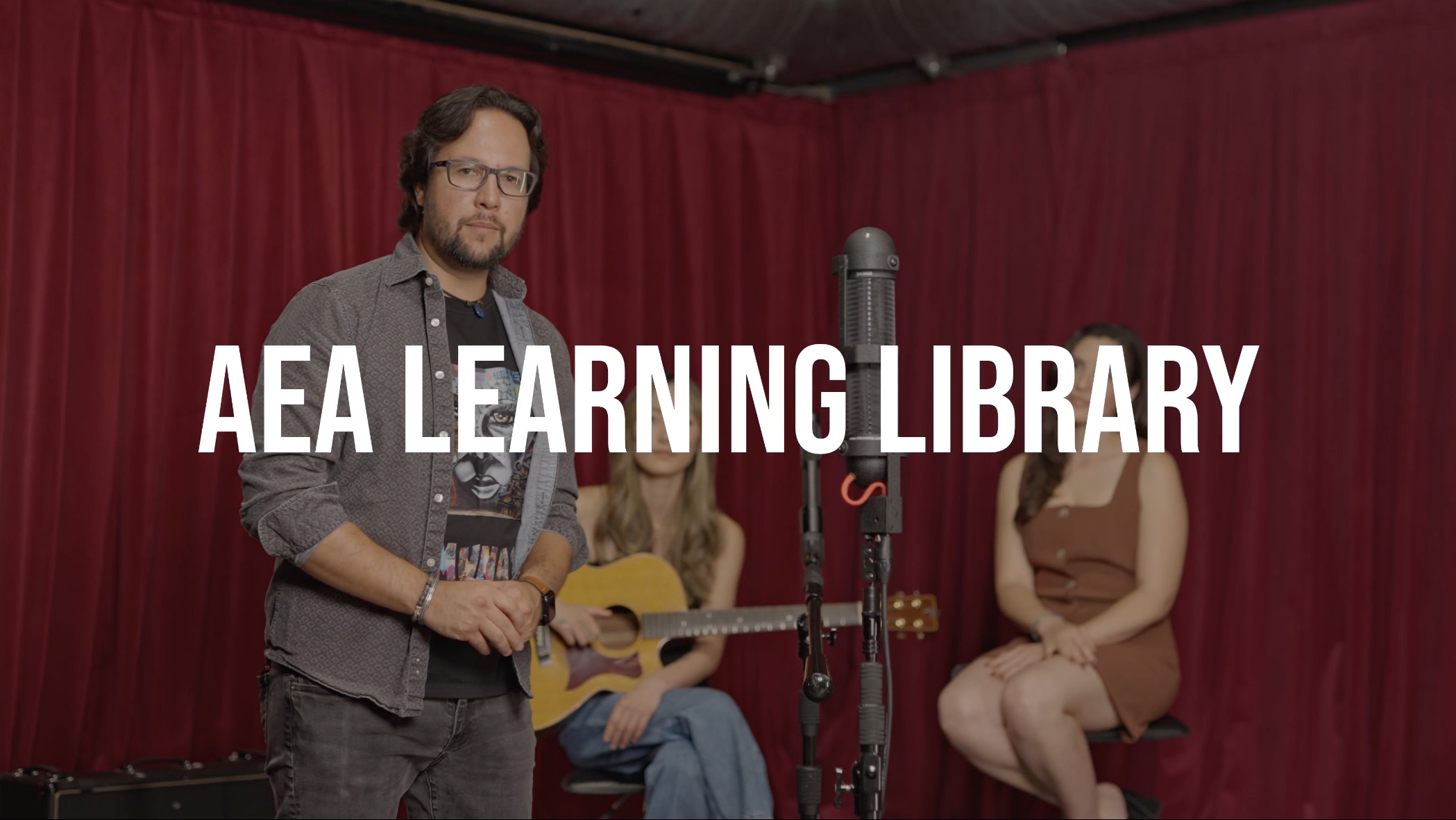
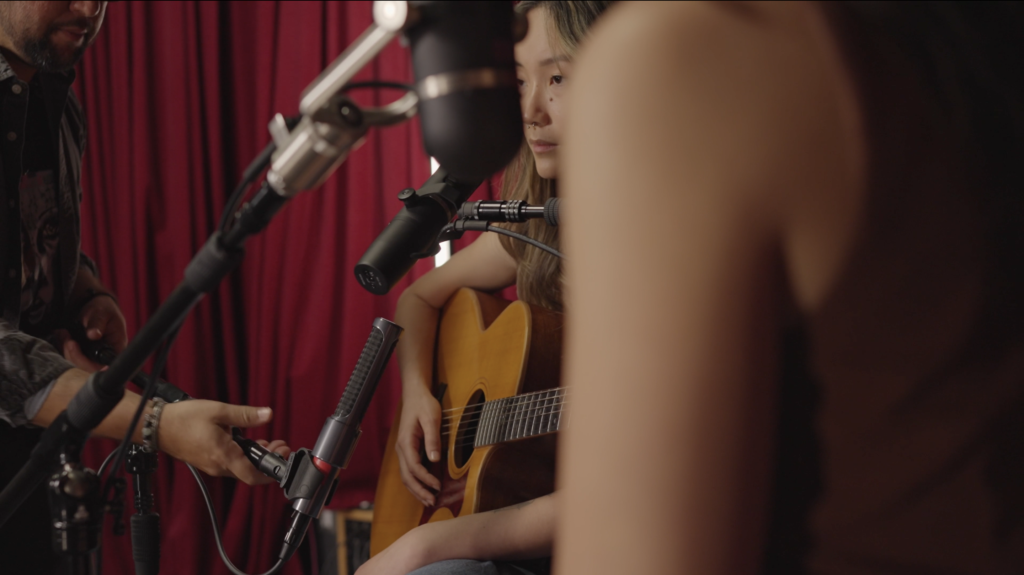
In the first episode of AEA Learning Library, producer, engineer, and Berklee College of Music professor John Escobar sets up at Apogee Studios in Santa Monica with two singer-songwriters, a collection of AEA ribbon microphones, and one goal — to show how recording decisions should evolve in real time based on what’s happening in the room.
Here are three lessons from the episode that you can bring into your next session.
1. Learn the Room Before You Start Recording
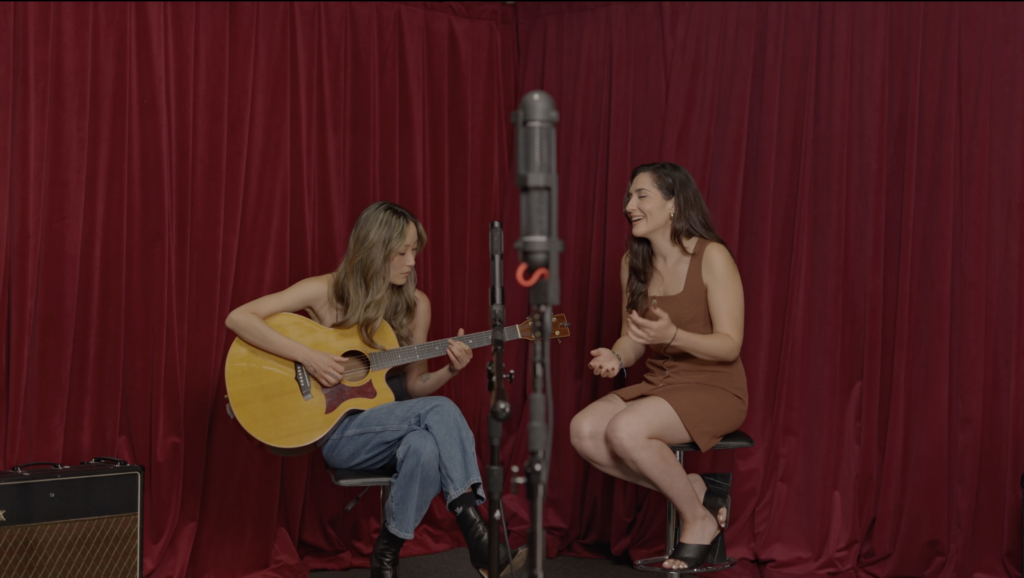
Before you place a single close mic, take a step back — literally. Set up your microphones at a distance from the performers and hit record. You’re not trying to capture the final sound yet. You’re trying to understand the space you’re working in and the dynamic between the musicians.
This is something a lot of us skip. You walk into an unfamiliar room and immediately start building your usual mic setup. Instead, try recording the room and the performers together first. Listen back. Let that inform everything that follows. Think of it as capturing an image of the music, one you can later add detail to with closer microphones.
In the episode, Escobar demonstrates this by starting with an R88 and N28 at varying distances from the performers. He records, listens back, and uses what he hears about the room’s liveliness and the musicians’ dynamic to guide every mic decision that follows.
Pay attention to how live or dead the room is. If you’re working with bidirectional ribbon mics, remember that they’re picking up sound from the front and the back. The further you move from the source, the more room reflections you’ll hear.
2. Move the Mic Before You Reach for EQ
The next time something doesn’t sound right in a recording, resist the urge to open a plugin. Instead, move the microphone.
Change its height. Adjust the angle. Pull it back a few inches or push it closer. You’d be surprised how much tonal control you have just by repositioning. If a vocal sounds too bass-heavy, you’re probably dealing with proximity effect, move the mic back. If the stereo image feels confused, try switching configurations. If one source is bleeding too much into another mic, adjust the angle so the null point is doing more of the work.
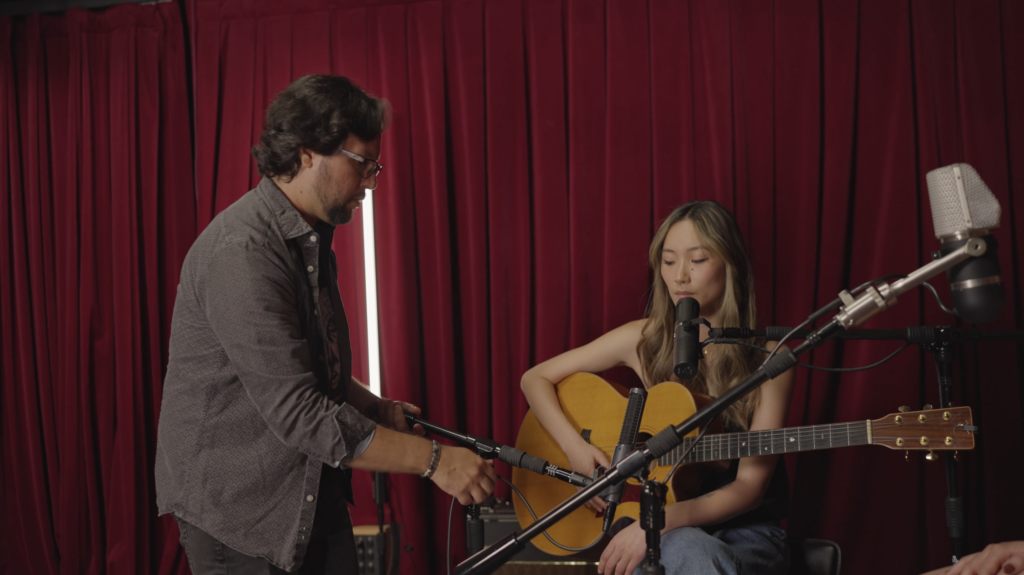
Throughout the episode, Escobar makes a point of never reaching for EQ. When the stereo image feels confused with both the R88 and N28 providing too much presence, he pulls the R88 back to function as a room mic and switches the N28 from Mid-Side to Blumlein. When proximity effect makes the vocals and guitar too bass-heavy, he moves the mics back and adjusts the angle. Every fix happens at the source.
This is your first and most musical form of EQ. A mic in the right position will give you a balanced frequency response from the start, which means less corrective processing later. A mic in the wrong position will have you chasing fixes in the mix that could have been solved at the source.
3. Use Null Points as Creative Tools for Separation
If you’re recording multiple performers in the same room, bleed is inevitable. But it doesn’t have to be a problem you fix in post, it can be something you manage at the source with smart mic placement.
Bidirectional microphones have two null points: one on each side, perpendicular to the capsule. Supercardioid mics have a tight, dramatic null at the rear. You can use both of these to your advantage.
Escobar puts this into practice throughout the episode. With an N13 on acoustic guitar, he angles the mic so the vertical null point rejects the singer’s voice from above while the horizontal null rejects the second vocalist. On vocals, he uses KU4 supercardioid mics whose tight polar pattern provides dramatic rejection of the guitar, giving him independent control over each source.
Start thinking of null points not as a spec on a data sheet, but as a practical tool you can aim and adjust just like the on-axis response.
The Bigger Picture
The real lesson here isn’t any single technique — it’s the workflow. Start wide. Listen. Make an adjustment. Listen again. Gradually refine the setup over the course of the session. There’s no single “correct” configuration. Every decision you make should be a response to what’s happening musically in the room.
If you want to see this process in action, watch the full first episode of AEA Learning Library on AEA’s YouTube channel. It’s presented in Spanish by John Escobar, and it’s a rare opportunity to watch a Berklee-level instructor work through real recording scenarios in real time.
Subscribe to AEA Ribbon Mics for future episodes.